
Xbox, Microsoft, Gaming, and AI: Part 3 - The Look out for the Future
Everyone is looking for the next thing
With the business plan laid out, if that does hold true (and I assume all those executives do have a plan), it is worth looking at patterns and the future. Broad strokes.
As mentioned in part 2, many places may be looking to have the next iPhone or the next Google Search, and so it is worth chasing down what may be the future service that everyone uses. The future is most likely to be software-based in terms of innovation, so what's the killer app?
Machine learning is extremely useful. In addition to all the things previously mentioned, even just this week, news broke about how researchers were able to develop a model and tool that, in a lab setting, can detect hidden cameras with 94% accuracy (I do wonder what the effectiveness on different types of lenses is). Just as much as it may be killing the environment, there are lightweight uses that you can train at home and run on a phone.
One of the big problems with Machine Learning becoming mainstream in the hands of everyday users is that you either have to make something functionally useless, like a Large Language Model that takes tremendous resources and is a generalist with massive amounts of inaccuracies (even other uses like DLSS get real messy in many cases and have lots of ghosting even with a ground truth right there). On the other hand, these smaller useful projects are bespoke models that are not generalizable to other uses and must be retrained, ultimately leading to a continued massive amount of resources being used still, but better. A large company wants to generate outsized profit, which means the useful everyday stuff is going to be made for the public, and the large money-capturing super models are going to be by companies who can cough up tens or hundreds of millions of dollars to train one. This also means that these large, generalizable tools are going to have greater inaccuracies, greater inefficiency, and less actual use. One of the potential reasons why there are so many AI companies is that investors can put in money to rent server space, which is accessible thanks to companies like Microsoft, and you're gambling on success. Just wait for the others to fail and see who can take themselves the furthest. Outspend the enemy.
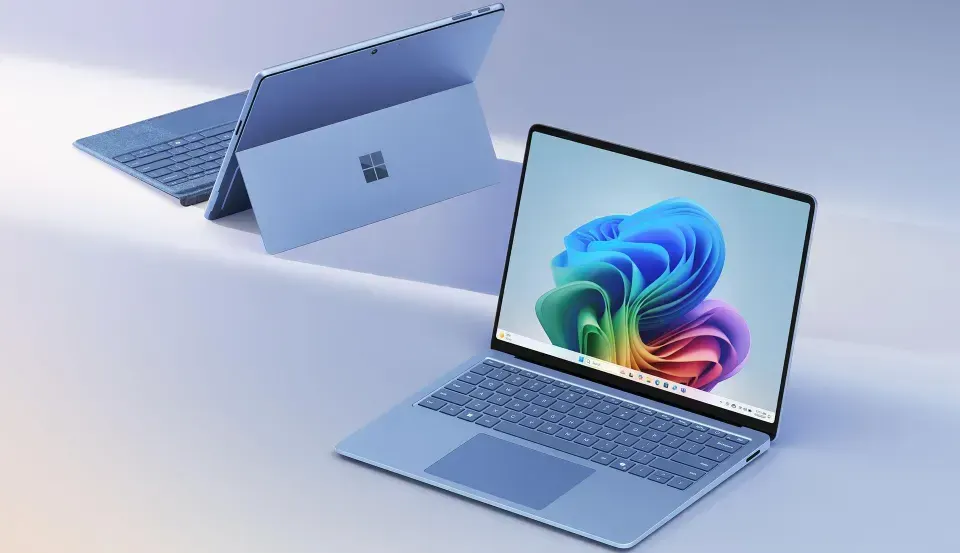
But I don't think a world of AI users is the goal. I think they know this too. It might make things easier; "Agentic" uses may have multiple bots referred to as "agents" 'check' themselves and come to better conclusions than they would independently, and reasoning models result in greater accuracy, but going from a regular model to a reasoning one made asking a chatbot (running Qwen 3.5 27B in my case) made asking it to "say hello" go from one step to well over a dozen visible steps, and potentially even more under the hood. It is not a reasonable return on investment for heavy users who this matters to. This is one major incentive that may have made Microsoft push for "AI PCs" since the processing cost is expensive; they were likely trying to offload it to users (Microsoft hopes you don't look at how much hard drive space a competent model takes up and how accurate the results actually are).
Now for a tangent:
There is also an interesting implication here as researchers look for distributed computing capability across more devices to manage use load more effectively. If there were a united "computing continuum" from data centers to personal devices, there would be much more capacity, but what would this mean for your ownership of your devices and being able to decide what they do? You didn't choose for Copilot to be on your computer. You didn't choose to have the NPU have to be baked in. You didn't choose what model would run. You probably only use Windows at this point because you're more afraid of switching and learning a new system rather than actually liking your desktop experience. You don't control your updates, telemetry data that's being collected on you, or all the other background processes draining your battery. While it may be a little on the "logical-conclusion fear-mongering" side of things, these boundaries are what is currently being tested. You are the product, and by buying a laptop, if there is a future that follows this route, your devices will eventually be Microsoft's data center. Hopefully that doesn't happen, but I do encourage you as a reader to learn about what is running on your devices and be mindful of how much control you actually have (I switched to the KDE Plasma environment on CachyOS and couldn't be happier personally).
Distributed systems like this would be better environmentally though, as solar is everywhere and wouldn't need centralized power plants, as well as taking advantage of load balancing across incredible numbers of devices with batteries. It would erase the need for Nuclear start ups for data centers and help people lean into renewables instead as it is much more viable to slap down some solar panels over building other power plants. But, that's a double tangent, and this primary tangent is aimed at lack of control and ownership of what you own as it is already taking hold on most people's devices.
But it was never about Machine Learning being the future. It was investor hype.
It doesn't take too much to think back to the crypto craze, and only finds value now in either the privacy-hardened tech sphere to some degree, or more often, pump-and-dump scams and funneling money to government officials. Or both. Most of them aren't tied to anything material; those that are tend to be tied to regular currencies, and it's all a bottomless hole. (This is not a commentary on government-backed fiat currency. Only commenting on the non-gov't-backed crypto here.)
There was also NFTs that would generate a code for an asset to say it was yours in a blockchain index as "proof of ownership," but was very obviously from day 1 a scam, as anyone can right-click and save an image, and it was mostly procedurally generated garbage (oh, doesn't that sound familiar?).
What the industry currently is is not a long-term plan like Nvidia has constructed over the course of over a decade to buy Mellanox for server infrastructure, build mass data centers, put them at the front of the industry for machine learning, put tensor cores in their GPUs, and create an induced demand that fooled the market. The market is about staying on your toes enough to get in early on whatever the next rug-pull is. There are uses to the technologies, like non-fungibility of transactions to ensure integrity of information history on distributed systems and crypto being digital cash in an increasingly online world (though I prefer the physical stuff personally), Jami is a wonderful decentralized, privacy-focused messenger app that uses blockchain since 2004 to verify its users fairly anonymously, but that isn't what these companies are after. They are here to make money.
There will be another scam. They will take useful technology and twist it in a way that will decrease the usefulness and capitalize on the perception, and at the end of the day, if they can trick the millionaires, billionaires, and investment firms to get themselves and exit, that's what really matters.
Banks are selling data, collecting biometrics, and Plaid records and sells all of your purchase information. There is an increasing number of money holders like PayPal and Venmo that are not banks; people are getting less scrupulous with their information, especially as the internet gets more complicated and how obscured generative AI muddies the water. Every smart TV connected to the internet tracks the content that passes through it, including via HDMI ports, and more. You are the product.
I would take swings at Flock selling your data publicly, but Google already has it. Tesla's idea of renting out your own car as a robo taxi so that you pay the cost is perfectly in line with today's economic system. So much control has been ripped from everyday people's hands that make it easier to exploit users. I find it hard to think of an area that this isn't happening to at least some small degree already, but undoubtedly it's coming. Even good software like Nym VPN, which is probably the best there is in terms of privacy, is on some level a crypto scheme (which I'll probably write about later, but it does seem to be a very legitimately top-tier VPN that obfuscates who you are the best).
We are seeing more companies follow military contracts for the billions that they can bring in. Microsoft has been on this train for a while with the Israeli military, as previously mentioned, but also contracted for their long-running and maligned projects to make Augmented Reality helmets for soldiers, recently including work with Anduril. We see game developer Krafton desperately trying to get into this market and use developers for AI war machines, and wanting to follow in Palantir's footsteps.
With every aspect of your life being tracked, the data is there. Your router can track where you are in your house if someone wanted to, with extreme accuracy, and Comcast is even using a similar technique marketed as a home security feature. With Wifi everywhere, the technology exists to identify you anywhere with high accuracy, especially when paired with resources like Flock, Axon, and Ring cameras.
Something funny (sad, not haha) to note is that, for a while now, we have had enough computing power. Web pages loaded quickly; Microsoft Word was plenty sufficient in the past and much quicker; YouTube videos don't need that weird ambient halo effect, and I guess it can look pretty good depending on taste, but we don't need that frosted glass taskbar that I think is already out of fashion on our desktops. In personal experiments, people have used Pi-hole to uncover that about a quarter of their internet traffic is ads. Webpages are riddled with them: auto-playing videos, audio streams starting automatically, suggestions you didn't ask for wasting processor cycles to keep you engaged; everyone has dozens of algorithms across platforms designed to serve up watchable content. These don't make the internet better; it's cruft added to make a hair more money than the cost of running it and work at scale. It leads to absurd inefficiency, and no one enjoys it. It's why I don't have ads here. Our devices could run faster, use less data, have higher battery life, and more, if we weren't ourselves the product. I am arguing a bit that there isn't actually a need for more compute power in the vast majority of devices, but rather just optimization and slimming down. My computer has never felt snappier since switching to Linux, and it shows what an optimized platform can do. I use about half the RAM I did on Windows.
Internet Traffic these days is immense and bloated; if you look at people's numbers, while it varies greatly from person to person, it can typically range from around 10% all the way up to the majority of traffic (1, 2, 3)(Note: this is by domain request, not data volume). If we look at ad trackers alone rather than the full landscape, one report from AdGuard showed that 10.22% of internet traffic is ad trackers, up from the previous year's 7.84%. The CEO of Cloudflare also noted that now the majority of internet traffic is via bots and AI agents as of a few months ago. As of writing, the numbers have skewed even further, passing the 50% point and now sitting at 60.6% bot traffic. To delve a tad deeper, feel free to check out this article for more numbers from earlier this summer. The point is, I would argue that our current bot-led era of computing has led to wasted capacity on a scale that is accelerating at a rate that is senseless. We could trim this fat, short of traditional indexing bots, and lower costs, raise efficiency, and be able to do everything we want online at dramatically lower costs in every sense of the word. This is exactly the problem, though. It's more profitable to operate on razor-thin margins, making fractions of a penny at a time on a scale previously inconceivable, meaning a future of bots/'AI agents' is our current trajectory and where all the beans are placed in a digitally focused world.
There is a world out there that cares about optimization, where we don't need multi-hundred-watt GPUs to play games, like how Assassin's Creed Mirage and Death Stranding are great-looking games that are happy on an iPhone. Output to a TV with screen mirroring or a cable and sync a controller with Bluetooth, and you can have a great experience with these games like you would on a console. The original Nintendo Switch can play GTA 5 at around 30FPS if you put some good thermal paste in it and overclock slightly. Our devices are incredibly capable and have been for years, simply unoptimized. My favorite example being Blendersito, where you can run a custom version of Blender on an old 2007 Nokia N95 (better coverage here).
This inefficiency has a limit, though, and we won't be stuck in this hole as a society forever. With margins so thin and the bubble on the verge of bursting, it is not sustainable for this strategy to continue. If money is the motive and there is none to be made, the model of business must shift, especially as ad space loses value due to virtual agents becoming so prominent. As others have said before, our current age of AI can be seen as an accelerant for other societal problems being faced and the flaws in our current economic systems. Even as costs like electricity try to be covered by Sam Altman's other companies wanting to build miniature nuclear power plants for data centers (Helion, Oklo), one has to ask if this is actually a financially sustainable move to introduce a complex and nonrenewable power source to fill the financial hole of a short-term economic investment fraud (...allegedly) strategy. The energy cost of a data center is fixed once it buys its hardware, and it needs to run 100% of the time to be financially optimized; thus, the only way to bring down costs are things like staffing and utilities until new hardware is bought. Then data center demand is pinched by local AI like the Windows AI PCs previously talked about on the blog and the 'computing continuum.' With token costs to run anything in a data center, it's cheaper to do it yourself for less money, so what's the point of all the infrastructure? You can run DeepSeek on your phone; hell, if you're patient, people have made it so you can run significant models on an ESP32. So again, what do you need more for? What is the point of the data center, except to exploit people's wallets and lack of knowledge about programs that can have you up and running in 30 seconds, like LM Studio, or running on hardware that's simpler than one of those newfangled smart toasters? Even if there is demand, there is a diminishing return to investments. We only need upscalers so good for games; we only need alpha mats so good for photo editing, etc. If a company stops, the software is accessible enough that someone can replace them with a bit of know-how. Corridor Crew released what seems to be the new best open-source green screen tool with just the resources they have (Video 1, video 2, github). One of the best regular background removal applications is a free and open-source version of a program called withoutBG. They can be optimized and trained to be better, but there are vastly diminishing returns where it just isn't economical to compete with.
Scams will always go to where the money is, and I think as I write this, it is hard to say we don't have everything we need. At this moment, I think outside of a world of tools that are made for the military or are translatable, we are headed to a future, much like Cory Doctorow has said, of enshittification and paying for lost features. But to add a layer to this, it is an era that preys not on everyone, but on people who are ignorant. Who don't look for alternatives and go with a marketed choice. This is not the individual's fault. There are billions, if not trillions, being spent on exactly this ignorance to maintain it. We are in an era of push-back, though. For every Google Docs that exists, there's a LibreOffice or Ellipsus. For every Canva, there's a Krita, or G.I.M.P., or Inkscape. For every Pro Tools, there's a Reaper or an Ardour. For every Windows, there are at least 12 trillion versions of Linux. For every Adobe product, there's DaVinci Resolve that can honestly replace half of the suite on the free tier. There's Blender for 3D With the business plan laid out, if that does hold true (and I assume all those executives do have a plan), it is worth looking at patterns and the future. Broad strokes.
As mentioned in part 2, many places may be looking to have the next iPhone or the next Google Search, and so it is worth chasing down what may be the future service that everyone uses. The future is most likely to be software-based in terms of innovation, so what's the killer app?
Machine learning is extremely useful. In addition to all the things previously mentioned, even just this week, news broke about how researchers were able to develop a model and tool that, in a lab setting, can detect hidden cameras with 94% accuracy (I do wonder what the effectiveness on different types of lenses is). Just as much as it may be killing the environment, there are lightweight uses that you can train at home and run on a phone.
One of the big problems with Machine Learning becoming mainstream in the hands of everyday users is that you either have to make something functionally useless, like a Large Language Model that takes tremendous resources and is a generalist with massive amounts of inaccuracies (even other uses like DLSS get real messy in many cases and have lots of ghosting even with a ground truth right there). On the other hand, these smaller useful projects are bespoke models that are not generalizable to other uses and must be retrained, ultimately leading to a continued massive amount of resources being used still, but better. A large company wants to generate outsized profit, which means the useful everyday stuff is going to be made for the public, and the large money-capturing super models are going to be by companies who can cough up tens or hundreds of millions of dollars to train one. This also means that these large, generalizable tools are going to have greater inaccuracies, greater inefficiency, and less actual use. One of the potential reasons why there are so many AI companies is that investors can put in money to rent server space, which is accessible thanks to companies like Microsoft, and you're gambling on success. Just wait for the others to fail and see who can take themselves the furthest. Outspend the enemy.
But I don't think a world of AI users is the goal. I think they know this too. It might make things easier; "Agentic" uses may have multiple bots referred to as "agents" 'check' themselves and come to better conclusions than they would independently, and reasoning models result in greater accuracy, but going from a regular model to a reasoning one made asking a chatbot (running Qwen 3.5 27B in my case) made asking it to "say hello" go from one step to well over a dozen visible steps, and potentially even more under the hood. It is not a reasonable return on investment for heavy users who this matters to. This is one major incentive that may have made Microsoft push for "AI PCs" since the processing cost is expensive; they were likely trying to offload it to users (Microsoft hopes you don't look at how much hard drive space a competent model takes up and how accurate the results actually are).
Now for a tangent:
There is also an interesting implication here as researchers look for distributed computing capability across more devices to manage use load more effectively. If there were a united "computing continuum" from data centers to personal devices, there would be much more capacity, but what would this mean for your ownership of your devices and being able to decide what they do? You didn't choose for Copilot to be on your computer. You didn't choose to have the NPU have to be baked in. You didn't choose what model would run. You probably only use Windows at this point because you're more afraid of switching and learning a new system rather than actually liking your desktop experience. You don't control your updates, telemetry data that's being collected on you, or all the other background processes draining your battery. While it may be a little on the "logical-conclusion fear-mongering" side of things, these boundaries are what is currently being tested. You are the product, and by buying a laptop, if there is a future that follows this route, your devices will eventually be Microsoft's data center. Hopefully that doesn't happen, but I do encourage you as a reader to learn about what is running on your devices and be mindful of how much control you actually have (I switched to the KDE Plasma environment on CachyOS and couldn't be happier personally).
Distributed systems like this would be better environmentally though, as solar is everywhere and wouldn't need centralized power plants, as well as taking advantage of load balancing across incredible numbers of devices with batteries. It would erase the need for Nuclear start ups for data centers and help people lean into renewables instead as it is much more viable to slap down some solar panels over building other power plants. But, that's a double tangent, and this primary tangent is aimed at lack of control and ownership of what you own as it is already taking hold on most people's devices.
But it was never about Machine Learning being the future. It was investor hype.
It doesn't take too much to think back to the crypto craze, and only finds value now in either the privacy-hardened tech sphere to some degree, or more often, pump-and-dump scams and funneling money to government officials. Or both. Most of them aren't tied to anything material; those that are tend to be tied to regular currencies, and it's all a bottomless hole. (This is not a commentary on government-backed fiat currency. Only commenting on the non-gov't-backed crypto here.)
There was also NFTs that would generate a code for an asset to say it was yours in a blockchain index as "proof of ownership," but was very obviously from day 1 a scam, as anyone can right-click and save an image, and it was mostly procedurally generated garbage (oh, doesn't that sound familiar?).
What the industry currently is is not a long-term plan like Nvidia has constructed over the course of over a decade to buy Mellanox for server infrastructure, build mass data centers, put them at the front of the industry for machine learning, put tensor cores in their GPUs, and create an induced demand that fooled the market. The market is about staying on your toes enough to get in early on whatever the next rug-pull is. There are uses to the technologies, like non-fungibility of transactions to ensure integrity of information history on distributed systems and crypto being digital cash in an increasingly online world (though I prefer the physical stuff personally), Jami is a wonderful decentralized, privacy-focused messenger app that uses blockchain since 2004 to verify its users fairly anonymously, but that isn't what these companies are after. They are here to make money.
There will be another scam. They will take useful technology and twist it in a way that will decrease the usefulness and capitalize on the perception, and at the end of the day, if they can trick the millionaires, billionaires, and investment firms to get themselves and exit, that's what really matters.
Banks are selling data, collecting biometrics, and Plaid records and sells all of your purchase information. There is an increasing number of money holders like PayPal and Venmo that are not banks; people are getting less scrupulous with their information, especially as the internet gets more complicated and how obscured generative AI muddies the water. Every smart TV connected to the internet tracks the content that passes through it, including via HDMI ports, and more. You are the product.
I would take swings at Flock selling your data publicly, but Google already has it. Tesla's idea of renting out your own car as a robo taxi so that you pay the cost is perfectly in line with today's economic system. So much control has been ripped from everyday people's hands that make it easier to exploit users. I find it hard to think of an area that this isn't happening to at least some small degree already, but undoubtedly it's coming. Even good software like Nym VPN, which is probably the best there is in terms of privacy, is on some level a crypto scheme (which I'll probably write about later, but it does seem to be a very legitimately top-tier VPN that obfuscates who you are the best).
We are seeing more companies follow military contracts for the billions that they can bring in. Microsoft has been on this train for a while with the Israeli military, as previously mentioned, but also contracted for their long-running and maligned projects to make Augmented Reality helmets for soldiers, recently including work with Anduril. We see game developer Krafton desperately trying to get into this market and use developers for AI war machines, and wanting to follow in Palantir's footsteps.
With every aspect of your life being tracked, the data is there. Your router can track where you are in your house if someone wanted to, with extreme accuracy, and Comcast is even using a similar technique marketed as a home security feature. With Wifi everywhere, the technology exists to identify you anywhere with high accuracy, especially when paired with resources like Flock, Axon, and Ring cameras.
Something funny (sad, not haha) to note is that, for a while now, we have had enough computing power. Web pages loaded quickly; Microsoft Word was plenty sufficient in the past and much quicker; YouTube videos don't need that weird ambient halo effect, and I guess it can look pretty good depending on taste, but we don't need that frosted glass taskbar that I think is already out of fashion on our desktops. In personal experiments, people have used Pi-hole to uncover that about a quarter of their internet traffic is ads. Webpages are riddled with them: auto-playing videos, audio streams starting automatically, suggestions you didn't ask for wasting processor cycles to keep you engaged; everyone has dozens of algorithms across platforms designed to serve up watchable content. These don't make the internet better; it's cruft added to make a hair more money than the cost of running it and work at scale. It leads to absurd inefficiency, and no one enjoys it. It's why I don't have ads here. Our devices could run faster, use less data, have higher battery life, and more, if we weren't ourselves the product. I am arguing a bit that there isn't actually a need for more compute power in the vast majority of devices, but rather just optimization and slimming down. My computer has never felt snappier since switching to Linux, and it shows what an optimized platform can do. I use about half the RAM I did on Windows.
Internet Traffic these days is immense and bloated; if you look at people's numbers, while it varies greatly from person to person, it can typically range from around 10% all the way up to the majority of traffic (1, 2, 3)(Note: this is by domain request, not data volume). If we look at ad trackers alone rather than the full landscape, one report from AdGuard showed that 10.22% of internet traffic is ad trackers, up from the previous year's 7.84%. The CEO of Cloudflare also noted that now the majority of internet traffic is via bots and AI agents as of a few months ago. As of writing, the numbers have skewed even further, passing the 50% point and now sitting at 60.6% bot traffic. To delve a tad deeper, feel free to check out this article for more numbers from earlier this summer. The point is, I would argue that our current bot-led era of computing has led to wasted capacity on a scale that is accelerating at a rate that is senseless. We could trim this fat, short of traditional indexing bots, and lower costs, raise efficiency, and be able to do everything we want online at dramatically lower costs in every sense of the word. This is exactly the problem, though. It's more profitable to operate on razor-thin margins, making fractions of a penny at a time on a scale previously inconceivable, meaning a future of bots/'AI agents' is our current trajectory and where all the beans are placed in a digitally focused world.
There is a world out there that cares about optimization, where we don't need multi-hundred-watt GPUs to play games, like how Assassin's Creed Mirage and Death Stranding are great-looking games that are happy on an iPhone. Output to a TV with screen mirroring or a cable and sync a controller with Bluetooth, and you can have a great experience with these games like you would on a console. The original Nintendo Switch can play GTA 5 at around 30FPS if you put some good thermal paste in it and overclock slightly. Our devices are incredibly capable and have been for years, simply unoptimized. My favorite example being Blendersito, where you can run a custom version of Blender on an old 2007 Nokia N95 (better coverage here).
This inefficiency has a limit, though, and we won't be stuck in this hole as a society forever. With margins so thin and the bubble on the verge of bursting, it is not sustainable for this strategy to continue. If money is the motive and there is none to be made, the model of business must shift, especially as ad space loses value due to virtual agents becoming so prominent. As others have said before, our current age of AI can be seen as an accelerant for other societal problems being faced and the flaws in our current economic systems. Even as costs like electricity try to be covered by Sam Altman's other companies wanting to build miniature nuclear power plants for data centers (Helion, Oklo), one has to ask if this is actually a financially sustainable move to introduce a complex and nonrenewable power source to fill the financial hole of a short-term economic investment fraud (...allegedly) strategy. The energy cost of a data center is fixed once it buys its hardware, and it needs to run 100% of the time to be financially optimized; thus, the only way to bring down costs are things like staffing and utilities until new hardware is bought. Then data center demand is pinched by local AI like the Windows AI PCs previously talked about on the blog and the 'computing continuum.' With token costs to run anything in a data center, it's cheaper to do it yourself for less money, so what's the point of all the infrastructure? You can run DeepSeek on your phone; hell, if you're patient, people have made it so you can run significant models on an ESP32. So again, what do you need more for? What is the point of the data center, except to exploit people's wallets and lack of knowledge about programs that can have you up and running in 30 seconds, like LM Studio, or running on hardware that's simpler than one of those newfangled smart toasters? Even if there is demand, there is a diminishing return to investments. We only need upscalers so good for games; we only need alpha mats so good for photo editing, etc. If a company stops, the software is accessible enough that someone can replace them with a bit of know-how. Corridor Crew released what seems to be the new best open-source green screen tool with just the resources they have (Video 1, video 2, github). One of the best regular background removal applications is a free and open-source version of a program called withoutBG. They can be optimized and trained to be better, but there are vastly diminishing returns where it just isn't economical to compete with.
Scams will always go to where the money is, and I think as I write this, it is hard to say we don't have everything we need. At this moment, I think outside of a world of tools that are made for the military or are translatable, we are headed to a future, much like Cory Doctorow has said, of enshittification and paying for lost features. But to add a layer to this, it is an era that preys not on everyone, but on people who are ignorant. Who don't look for alternatives and go with a marketed choice. This is not the individual's fault. There are billions, if not trillions, being spent on exactly this ignorance to maintain it. We are in an era of push-back, though. For every Google Docs that exists, there's a LibreOffice or Ellipsus. For every Canva, there's a Krita, or G.I.M.P., or Inkscape. For every Pro Tools, there's a Reaper or an Ardour. For every Windows, there are at least 12 trillion versions of Linux. For every Adobe product, there's DaVinci Resolve that can honestly replace half of the suite on the free tier. There's Blender for 3D modeling, there's Kdenlive for video editing, there's an endless number of tools out there being made by people who care more and will treat you better and more fairly. Not all of them will be as incredible as Blender is in the open-source space, but they're usually pretty solid, and there will almost always be someone, even if not open source, that wants to sell an honest product (at least until they get bought out) to make a temporary home at. All software is fleeting, but part of the beauty is always getting to learn and discover.
The next capitalist strategy is likely preying on ignorance, lack of accountability, and not checking the numbers. This goes for the investor class as well. You either see the exit capital and are going to exploit the ignorant, or you are too much of a fool to realize what you are investing in and think it can go on forever.
You have power over whether they can exploit you, and the more you search and learn, the more you can help others as well. The reason open source software exists is because of similar people who refuse to let it happen and take those reins so that people have somewhere to go.
For the time being, the cost will be immense, but fingers crossed that we can salvage and reuse some of the hardware to build open, distributed, and accessible systems on a global level that can push away from predatory corporations and more toward building out the open-source ecosystem that all of these companies needed to get started and still use to this day.
Please note: This saga is not over in terms of news. For practical reasons like finite time, I am going to stop updating this story. Much like reality though, situations continue to evolve. Microsoft and Xbox continue to take steps in their directions. There is much more I could have added but we all need to put the pen down at some point. Much could change over the near term, and want to make a point that even day to day some of this information may become out-dated. Thank you for reading and understanding and note that the last update to this story was mid-September 2026.modeling, there's Kdenlive for video editing, there's an endless number of tools out there being made by people who care more and will treat you better and more fairly. Not all of them will be as incredible as Blender is in the open-source space, but they're usually pretty solid, and there will almost always be someone, even if not open source, that wants to sell an honest product (at least until they get bought out) to make a temporary home at. All software is fleeting, but part of the beauty is always getting to learn and discover.
The next capitalist strategy is likely preying on ignorance, lack of accountability, and not checking the numbers. This goes for the investor class as well. You either see the exit capital and are going to exploit the ignorant, or you are too much of a fool to realize what you are investing in and think it can go on forever.
You have power over whether they can exploit you, and the more you search and learn, the more you can help others as well. The reason open source software exists is because of similar people who refuse to let it happen and take those reins so that people have somewhere to go.
For the time being, the cost will be immense, but fingers crossed that we can salvage and reuse some of the hardware to build open, distributed, and accessible systems on a global level that can push away from predatory corporations and more toward building out the open-source ecosystem that all of these companies needed to get started and still use to this day.
Please note: This saga is not over in terms of news. For practical reasons like finite time, I am going to stop updating this story. Much like reality though, situations continue to evolve. Microsoft and Xbox continue to take steps in their directions. There is much more I could have added but we all need to put the pen down at some point. Much could change over the near term, and want to make a point that even day to day some of this information may become out-dated. Thank you for reading and understanding and note that the last update to this story was mid-September 2026.