
Finally, a phone I can be excited about
Privacy and power? Finally, some sense.
If you are a fan of privacy and are on android, you may have heard of something called GrapheneOS. The idea behind this version of android is that it sandboxes the Google Play services so it doesn't have full access to your phone, and thus is more private. It also encrypts the drive, has a distress code you can set up so that your phone destroys all its files if it is entered, and a few other neat tricks to help protect your information. It may not be perfect, but its as close as it gets before resorting to run a more traditional version of Linux on your phone like Ubuntu Touch.
So far though, only Pixel phones have been supported as they have a level of hardware required for "hardware memory tagging security feature as part of moving to new ARMv9 CPU cores" according to the developers.
You may be wondering if there are other phones that are interesting alternatives, and there are, some of them even may be right for you. One phone is the Jolla Phone. It seems like a pretty good package. It is an attempt at a privacy-focused European phone. It runs its own operating system called Sailfish OS which claims to be able to run android apps just fine. Sadly, it is only for sail in Europe, leaving much of the world without access to it, barring complicated importing procedures.
It does make me admire the privacy efforts in Europe though between the GDPR and its trickle down effects on a more global scale, Euro-Office which is supposed to be a open-source alternative to Microsoft Office when it releases (I prefer LibreOffice personally, and if I need more I'll look to NextCloud or Ellipsus), EUSP which is a privacy focused indexer that powers search engines like Ecosia and Qwant (if you happen to want to pull even more away from Google), and more. Great stuff coming out of Europe recently.
Another neat phone is the Fairphone (coincidentally, also European). The goal there is to provide a highly repairable phone as sustainably as possible. They aren't a huge operation, and you'll be giving up some water resistance (light splashes should still be fine), but their goal of building a more ethical device in every way they can is admirable. If I didn't so consistently drop my phone in water, I'd have made it my daily driver at this point.
Some other phones are out there too, less compelling, but they work. I believe Jolla Phone, Nothing, and OnePlus phones have unlocked bootloaders like the Fairphone, making it so you can put different flavors of android on it such as /e/OS which is a great OS from what I hear and better than stock android for privacy, but to my knowledge no other flavor of android goes to the same length as Graphene.
"Great, so what's so special about Motorola then?"
Some conflicts of interest aside (they do make Automatic License Plate Readers, full disclosure), they are the only phone that has all the features I'm looking for, and in some way or another, the rest are missing a key feature I need.
-Fairphone, Jolla, and Pixels can all move in the right direction, but they all have fairly weak processors in them. I want some muscle.
-Jolla is not available in the US.
-Fairphone does not have the water resistance I need.
-Pixels have some quirks and while I'd be getting it used, I'd rather just move on from Google all together.
-Nothing and OnePlus don't support graphene formally.
-Pixels are handing Google more money despite being the problem.
-And that leaves the Motorola.
The Motorola Signature 27 will have the new Snapdragon 8 Elite Extreme Gen 6. A frustrating trend I've noticed recently is that many companies are switching to Mediatek processors, especially for tablets. This is a big no-no from me because I would like to play games on my phone. More specifically, if an original Nintendo Switch can play GTA 5 at playable frame rates, I want something I can put emulators on for when I'm on the train, sitting with family or friends, or just having fun. Mediatek processors have closed source drivers that make it very hard, if not near impossible to get an emulator to work with. By having this new gen Snapdragon chip, we're looking at more power, more efficiency, more potential. With emulators from the PS3 and Nintendo Switch generations well under development and working better by the day, this processor is key to great mobile emulation in such a small form factor.
Motorola has also explicitly said that the phone will have the option to ship with GrapheneOS pre-installed and made to explicitly support the operating system. With water resistance and US availability, those are a cherry on top.
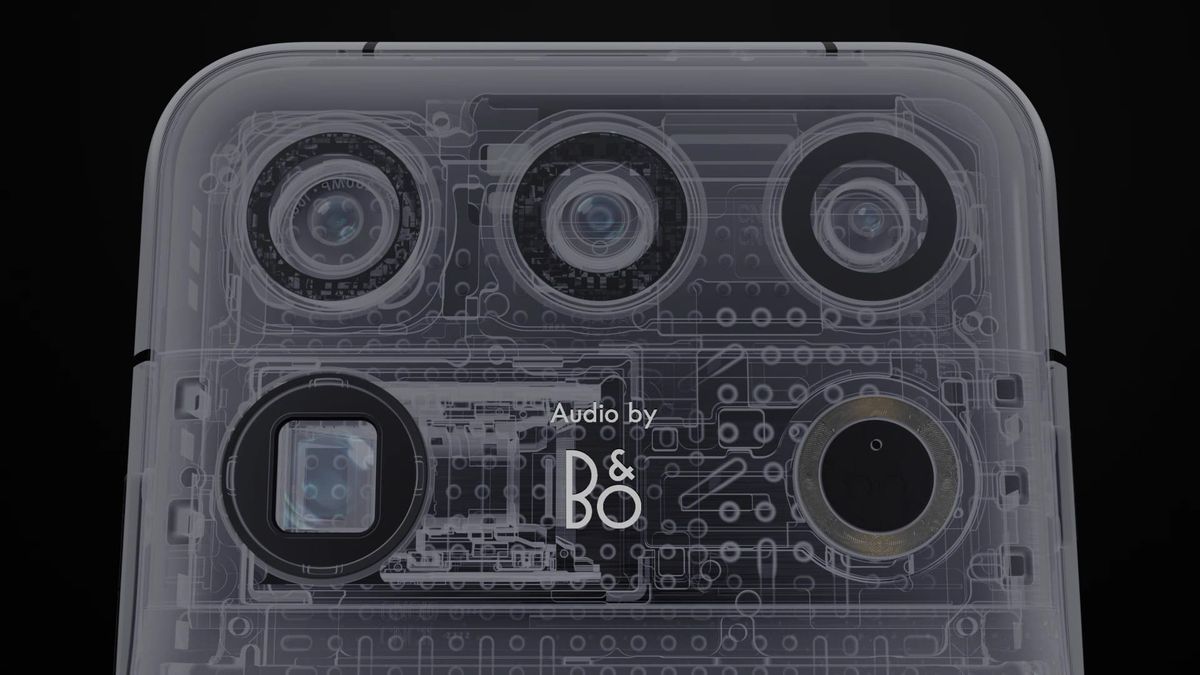
There are a few other details that have been revealed such as using a periscope lens on the 200 Megapixel camera (as it should be) to actually take advantage of its range, rather than having a 100MP camera and then a 50MP 2x camera which is useless. At the scale of 200MP, the number of pixels don't really matter, but at least there's sense being used on where to put the lens. Sadly, they did say that there would be 100x zoom using generative AI which is just outright lying about what zoom is (though it was already a lie when companies acted like digital zoom wasn't just cropping the image), but this is where we are in technology I suppose.
There is one feature that I hope works on Graphene when I make the switch one day, and that's the hope that Graphene adds android desktop mode support so that you can plug it into a screen and it works like a desktop computer more or less. With so much power in our pocket, and software like FEX adding an x86 to ARM compatibility layer so that desktop applications can run on mobile hardware (like the steam frame), it represents an interesting potential for a pocket gaming PC. Additionally, you could grab a briefcase, an external display, a battery bank, USB hub, and Bluetooth keyboard with an optional mouse (some software like Samsung Dex lets you use your phone like a touch pad) and make a plug and play laptop. A phone when you want it, a laptop when you need it. No faffing about with logging into a new device, no paying for all this new internal hardware, and things just work. Your laptop would even have internet anywhere your phone gets service without any additional cost or hassle, since it would all be one and the same.
Even more, you could put a VPN on your phone like Mullvad, PrivateVPN, (not Private Internet Access, who is owned by Kape) or Nym (who I hope to talk about one day as both maybe the best and sketchiest VPN), and have a somewhat private device for all your work anywhere you go.
Getting back onto the phone however, there is a big drawback. It's a flagship phone, during a memory crisis, and is going to cost flagship money when it releases in 2027. I would fully expect it to cost at least $1300 on release next year, given the direction prices have gone the decade. My play here is to wait until it's 2-3 years old and get it off eBay, but hopefully it won't be that stark. Until then, the most environmentally friendly phone there is, is the one you already have. And after that, its the one you buy used.
Here's hoping this is a phone that holds up to the excitement and can do the privacy, emulation, water resistance, backflips, and everything else I expect it too.