
Control Resonant: What comes together in a game as uneven and great as this?
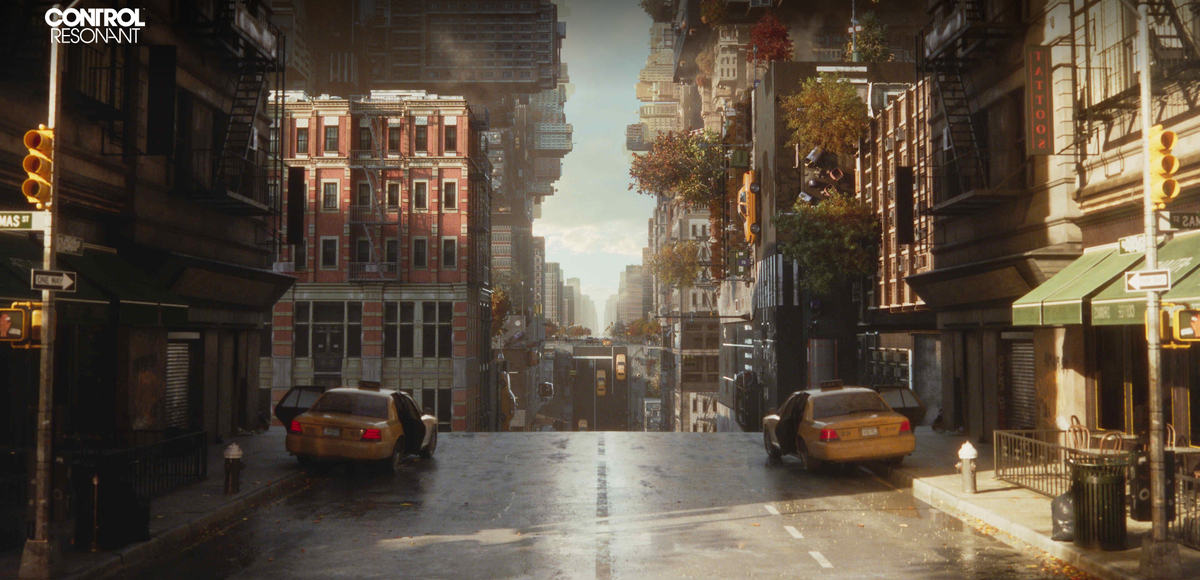
It's a great game with a lot of oddities and loose ends. Know that I thought it was great, but this article is a little bit of an exploration of those loose ends. I recommend you check it out for yourself, but the gameplay and open world design is a bit weak, after all, Remedy games are really about their story telling.
Control Resonant is the sequel to 2019 game Control. Control cemented itself as one of my favorite games through a mix of gender euphoria, instilling curiosity, dynamic abilities and environmental interaction, and the incredible artistry on display not just in story telling, but few if any games match its visual intrigue in its class size.
Alan Wake came before Control and was honestly pretty mid in my opinion. I think for its time it was great, but looking back, it's hard to say it isn't repetitive or finicky. Flash forward to Alan Wake 2, coming out in 2023, (while i only got about 1/2 or 3/4 of the way through), it took the game and made it an absolute marvel of game design and story telling. For a game that was made just barely by the fact that Epic Games gave them a huge wad of money to make it exclusive, it is one of the most visually stunning games I have played both in graphical fidelity and artistic direction. The game oozes detail in the connections made with the graffiti in world, the detail of the effects on shadow creature, simple but interesting puzzles that change the game around you as it completes, and taking a relatively basic story (sorry, but the fact that it leaves so many questions is not the same as in game lore) and fleshes it out to really be something more interesting than its precursor. While Alan Wake 1 was meh, and I have not played American Nightmare, Alan Wake 2 is a smash hit that is devastatingly tied to the Epic Store and a treasure that most people will never play because of that fact (pirate it if you have to, I don't care, just go play it).
Thankfully Alan Wake 2 did ultimately work out and was profitable, quickly hitting 2 million sales, even if the potential roof was higher. The reason I bring this up is that I can't help but feel that the game felt limited in a myriad of ways that those extra sales may have helped with. I don't fault the studio, everyone there is happy, and there was no other way for AW2 to get made, but merely pondering what could have otherwise been possible in a non-exclusive universe.
So now to get to Control Resonant. A brilliant game with limits at every turn, potential left on the table, but never the less a game that you put down and can't help but feel that it is an incredible feat of story telling when compared to any of its peers.

Without major spoilers and information that is mostly a given if you've even heard of the series is that: Resonant centers on Dylan, Jessie Faden's brother who was not fortunate enough to escape the Federal Bureau of Control after the discovery of a magical slide projector that sets the story for the series in motion. Control 1 follows Jessie as they search for Dylan, and Resonant follows Dylan 7 years after the events of the first game when Jessie must leave to handle some important and unknown business. That's the start of the story and I won't say much else on it because one needs to experience it for themself to really enjoy it.
Resonant it would turn out is a super hero game of the early 2000s and a little bit of what we see with the newer Marvel Spider-Man games. Think Hulk 2003, Prototype, Spider-Man, etc. The game follows in this genre which I was originally baffled by, but like much of what I'll say, is a logical conclusion. If Control 1 was in the Oldest House, Control 2 is outside of it, necessitating the structure due to the super natural abilities. It seems conventional, but much of the game design seems to come from logical conclusions like this. Control 1 centered on a woman as a protagonist, Control 2 centers on a man, Control 1 centered on ranged combat, Control 2 centers on Ranged combat, etc.
It is of note that Control Resonant is still built on Remedy's own Northlight engine which is capable of producing incredible visuals and have been noted as an early adopter of current gen rendering tech like DirectX12, ray tracing, and DLSS. This made it a bit baffling that the first thing I noticed about the game was that visual quality in Resonant was significantly worse. Buildings were extremely flat, little architectural flourishes like awnings and trimmings on buildings had no collision. Occasionally, entire sections of buildings I could just walk through. This was likely a compromise though. Compared to AW and C1, the camera is notably further back and with a much larger draw distance due to being able to be outside and float above your surroundings. This is an optimization issue that ended up robbing some detail, but after a bit, I noticed that the visual downgrade wasn't worth complaining about and still looked pretty great overall, except for one key area. Character rendering and animations.
Character Rendering and animations are downright bad in this game. I expected it to match the quality of C1, but alas it fell far short. It looked more like that first guy you meet in Destiny 2 where the lighting is just kinda awful and faces get lost in shadow, skin looks flat, and everyone seems lifeless. The material rendering is pretty solid and it makes me wonder if the reason everyone wears a hat is because of this low fidelity rendering. There are two types of character models though as I'll show below. One for cut scenes and close up, and one for in-world, and most of the dialogue outside of very key moments few and far between is all going to use the in-world rendering.
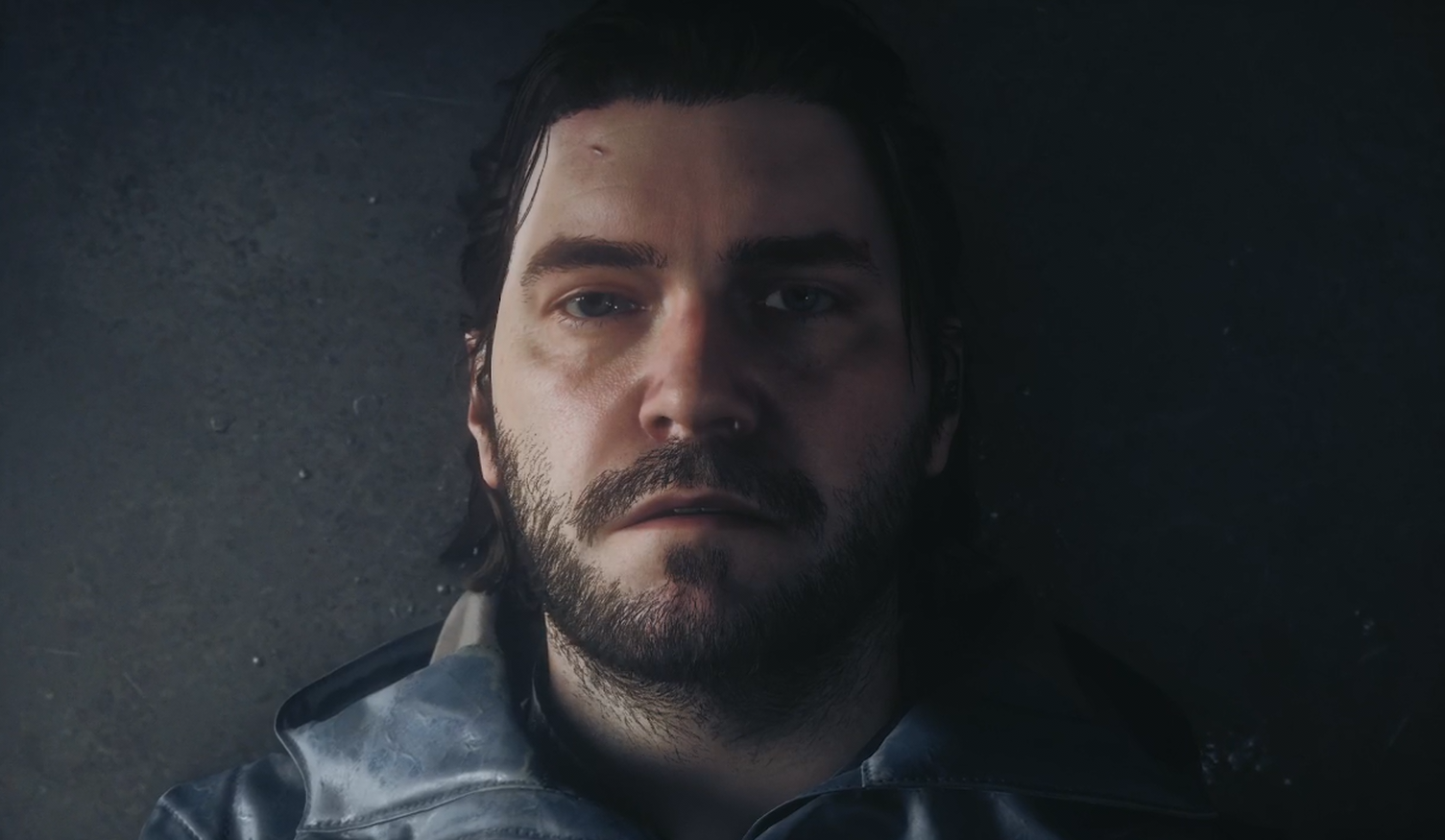
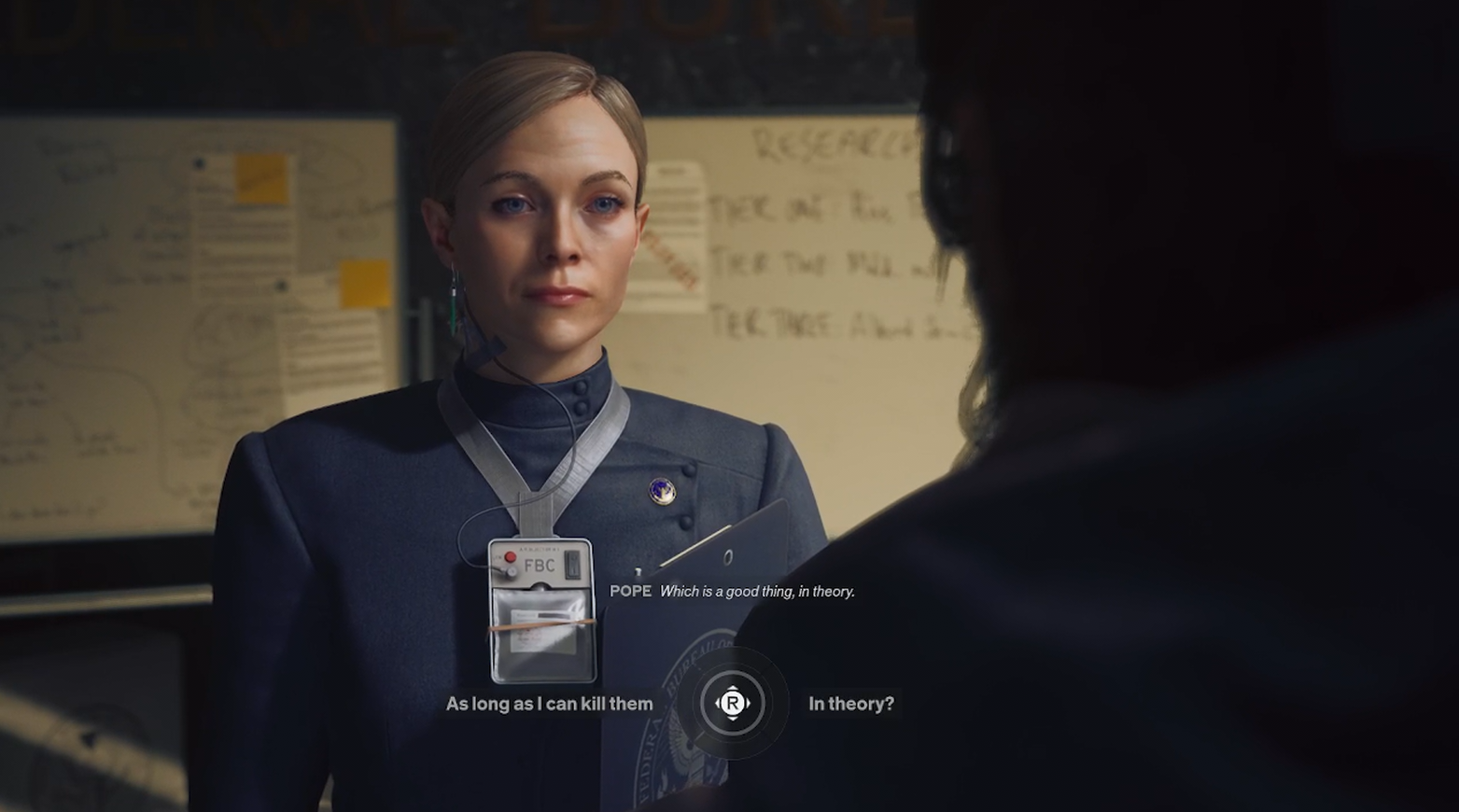
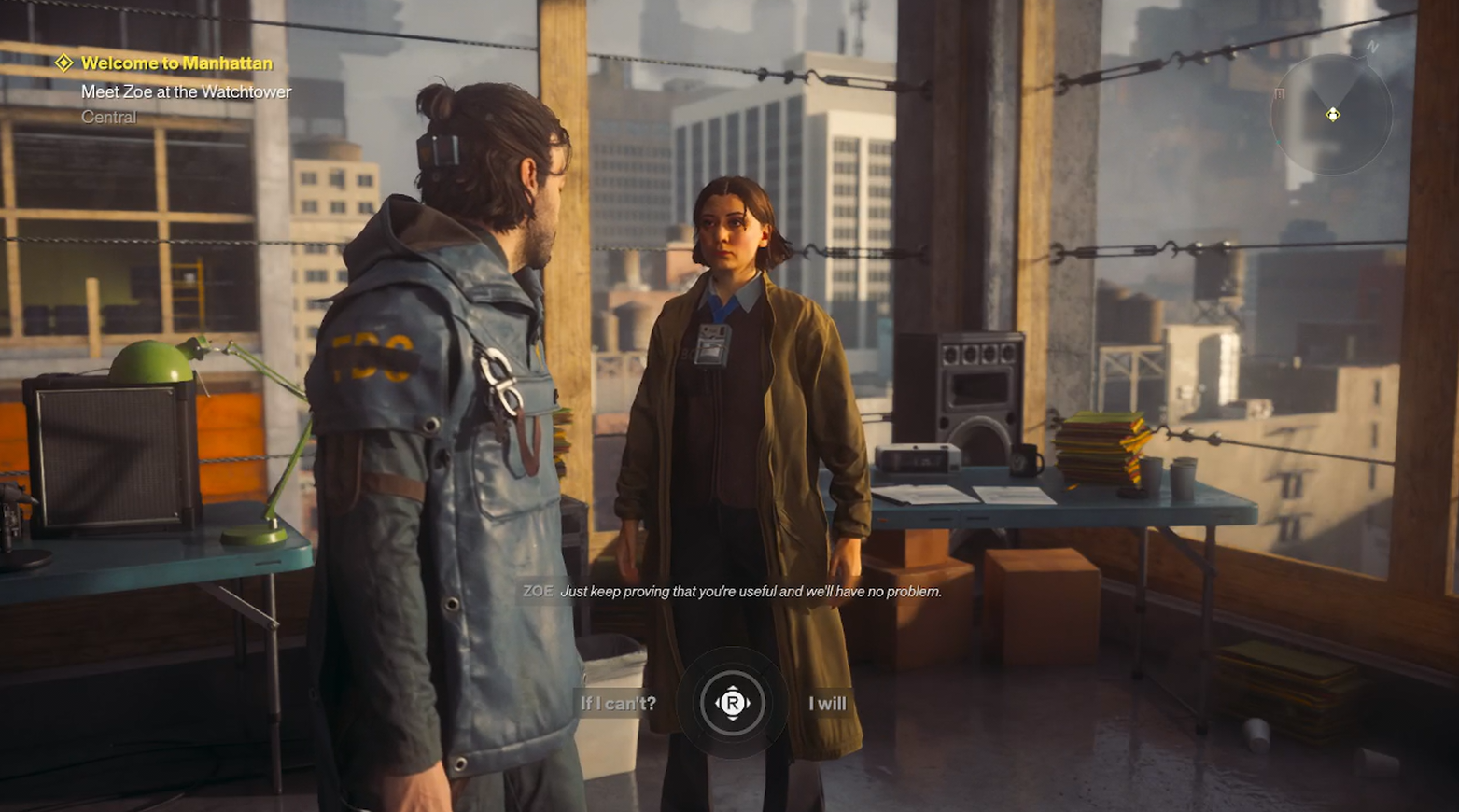
I tried messing with ray tracing, killing my frame rate to increase quality, but this is the best you'll ever see your Handler which is the second most significant character in the game. Their animations are awkward, as are everyone else's and nothing is quite right except for Dylan. I very much hope there is a mod to swap in the cut scene models for in-world ones eventually.
Another oddity of the game is that there is no photo mode until next month. This might seem like a small thing, but Control is all about reading documents and getting into the lore. In the first game you could press the aim button to focus in on whiteboards, but since this game is melee, there is no such option. Best you can do is wait 10 seconds and the camera will slowly pan in slightly but it still leaves most things illegible. You may be wondering "why are these whiteboards important", and boy howdy if there has ever been a game series to go such great lengths with whiteboards, it is this one. Almost every whiteboard in the game is bespoke with notes relating to the character's offices they are in, talking about their objectives, relating to their research notes, and much more. To not be able to read these may not technically be a criminal offense, but it sure is a shame for the sheer amount of work that went into them to not be legible in a practical way. Photo mode is coming and will help with this soon, but this bring me to another point.
Delaying Control Resonant is a hassle. And I don't mean it costs time and money. I mean the game is specifically written for the day it came out. All the research notes and events of the game begin on Sept. 25th 2026 and are dated as such in game. A delay would mean that they have to keep going through the in-game timeline and editing many of the in game documents to stay time-accurate, and to push into winter would either destroy they special effect they're going for to immerse the player in the timeline, or have to explain a very snow-less winter in a game.
Going back to world design though, until you complete the west incursion zone and do the following Jesse mission to unlock a movement ability, the open world is going to feel... kinda awkward. It takes maybe 5 hours in my case to do it, and the game gives you enough freedom to do things in the order you want, but it does secretly have an opinion where it can take longer or shorter depending on your choices of where to go first. Once these missions are complete however, the city opens up in exciting ways that will push you through with incredible momentum and bring it to life. Until then, however, you will be attacked by a slew of not just meaningless enemies littered around more than actual Manhattan has garbage, but of World Missions that reset every time the zone levels up, meaning that you have a nearly endless supply of Ubisoft-style open world objective slop you can do. You probably should do some of it as well, because it is one major way to get upgrade materials. And yes, this game has a material economy to it, and while I wouldn't say it is punitive or holds you back as a player as its primary intent is to be a progression system, I would argue that Resonant could have been a stronger game without it. That is for me though, where other people who just want to jump from rooftop to rooftop as a super hero may love the excuse to spend extra time in the world even after completing all significant events. There are side quests you can do that are Ubisoft-style objectives that show more restraint, like how the game has 7 main zones to go to and often missions like "find the dog toy" or "help the taxi" will only occur once per zone (that I've found). This restraint makes it more manageable rather than mind-numbingly bloated, and they can all be ignored if preferred.
In terms of what you're using these resources for, it is better than C1, as there are deeper more meaningful combat systems in place to upgrade and allocate skills. You have powers that unlock from story events, you have your primary weapon form, secondary weapon form, and combo finisher that are all upgradable, charms that give a passive buff or trade-off, and skill points. Thankfully, all weapon form upgrades will increase your overall weapon strength, no matter which form you upgrade. All of them make the overall weapon (The Aberrant) more powerful.
Combat in my opinion has not felt great though. While I have not explored all the depths of the combat system, I have completed most of the upgrades and it's mostly a choice of whether you want to do weapon damage with some abilities, weapon damage with buffs, stagger build, or summons (which will still require you to actually hack at enemies quite a bit). I landed in the summon camp mostly with my secondary weapon form being stagger, and relied on one of my abilities to do major target damage. This felt pretty solid and kind of optimal as after finishing my play through, I discovered I never found the possibility to change my first ability. Maybe it's possible and I'll go back, but it seems like something I may have to New Game+ to unlock. Hopefully I am just missing whatever key thing there is. What I found though is that unless you specialize into doing major weapon damage, stagger is almost by default the way to go. I can stagger most enemies in two secondary form attacks and then insta-kill them with a finisher. Then I get buffed and kill all the low level cretins and combat is done. This is what I found most optimal and was ultimately disappointed in the lack of feeling the game brought me there. It didn't feel particularly great and was incredibly incredibly repetitive, especially as my Hammer of Staggering as I'll call it is almost a requirement to remove armor in a reasonable time frame on 2 of the 3 factions. There's always work around and different ways to do things, but while it was enough to get me through the game, this is not a combat system for those who rely on a good and deep one. It is a combat system that offers greater depth than your bog standard hack and slash, and will be adequate rather than outstanding.
With the focus on crushing things and the ability to run through road barriers, you might expect a very destructible world like in C1, where you could rip concrete out of the wall or throw trashcans and have a visible difference in the environment. That is not the case here. While there are lots of physics objects in the world to knock over, there is actually a far lower level of destructibility. I assume this is for performance and work prioritization. Given the number of different assets, it would undoubtedly take a huge amount of work to rig up how everything should tear apart and integrate those fragments into an interactable physics system, so for most things they just don't. Chairs, some coffee cups, trays, and various things can still react, but you will very often be left wondering why the chair will be flown across a room but the pile of papers is unaffected, or why you can run straight through a concrete road barrier on a whim and watch it disintegrate, but the rickety chain link fence easily restrains god-killer Dylan. C1 was very consistent about this, but they didn't even carry over the work from C1 for destructible office spaces or concrete chunks for areas that are in both games.
Both this destructibility and character rendering are likely also victims of the camera angle. In my opinion, the far back camera of Resonant makes much of the game feel impersonal and like I'm watching Dylan rather than am Dylan.
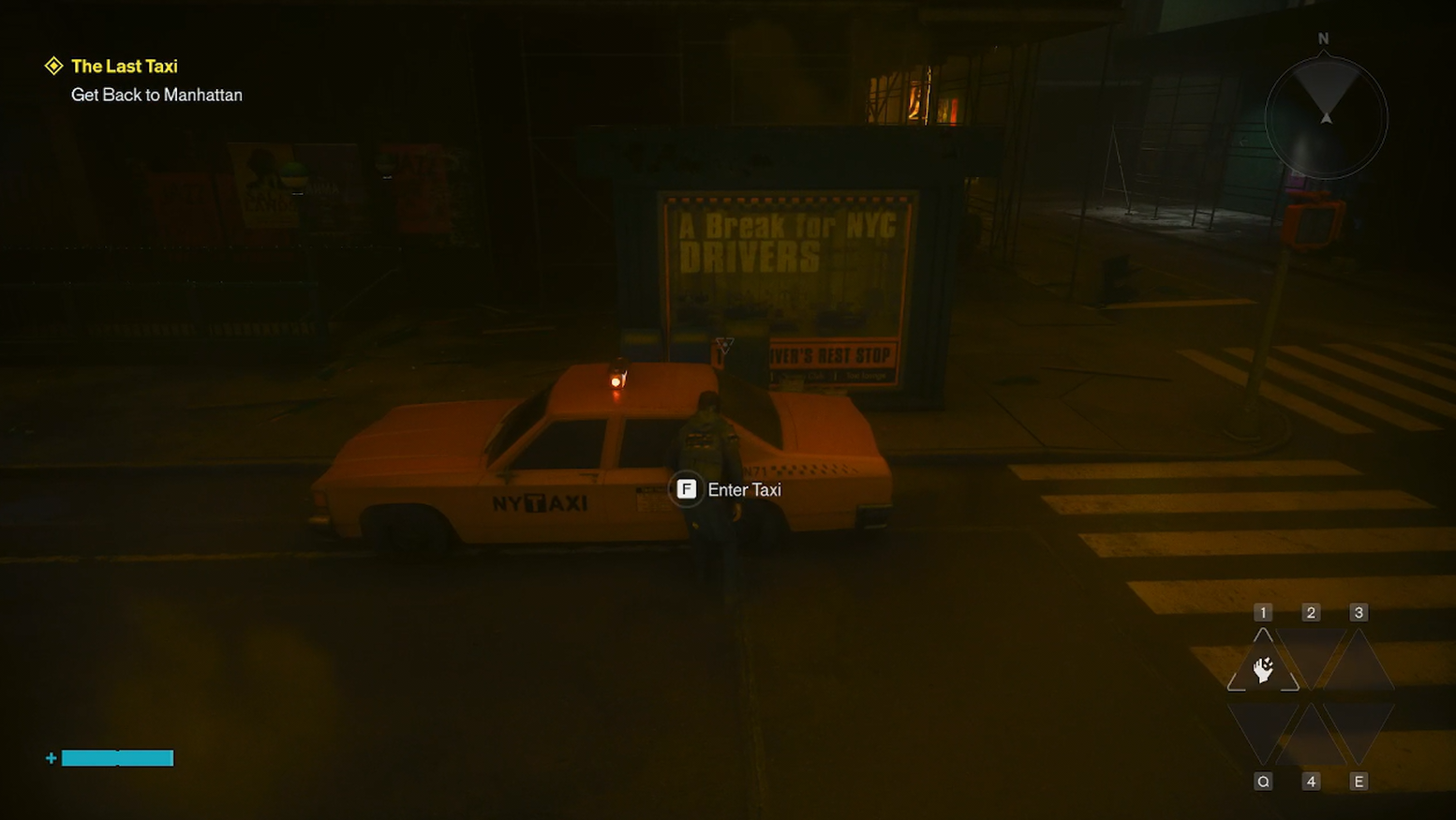
This camera angle is not a mistake. The camera being pulled back means that Level of Detail can be lower saving on performance. This is important because while things may be less detailed, you can see much more at any given time. Another reason why Resonant likely has the pulled back camera angle is awareness of your surroundings. Since you are in a giant city that is folding in on itself, enemies can come from and will spawn from anywhere. They also made a decision that there were going to be a lot, and I mean a lot, of enemies that use projectiles to attack you, meaning if you don't have a pulled back camera, you won't survive. I assume they made so many ranged enemies to make combat harder and force prioritization and combat variability, but it does feel awkward and for me, has resulted in many deaths I could do little about due to a quick firing cheap-shot in otherwise solid scenarios. The pulled back camera likely also helps orient yourself in a city filled with tall buildings and may otherwise feel somehow even more disorienting to navigate. If there is ever a first person mod for this game though, you bet I want to try it so I can explore the city even closer to how Dylan sees it and put myself in his shoes. Getting lost in such a labyrinthine map seems like a dream, especially in an area like the Sinkhole (But I shan't say more for risk of spoilers).
Another thing that may feel awkward is some of the movement abilities regarding gravity shifting and grapple points to shift to. The walls that you can shift gravity to are actually not all walls or surfaces, but typically marked by roads or carpet. This means sides of buildings are typically not available as a surface or trying to platform in unconventional ways. As much fun as it would be, there is reason for this (as much as I would love completely free form abilities). Each gravity plane has edges to where that plane is effective to facilitate particular puzzles or to limit areas where you might get yourself stuck or cutting through content in unintended ways. Level design is hard, level design as though every wall of the inside of a cube is claimable from the inside is a whole other world.
Similarly for grapple points, one may wonder why there are limited grapple points rather than everywhere being systemically designed. While this may have been tested, I assume that it is because grapple points also need to orient the player to ensure clean landing on each surface that it is linked to. Otherwise, you would be able to fling yourself onto a surface without a shift in gravity and end up falling into the void. This is also a mechanic used in some puzzles to try to draw extra creative potential out of it, but at the cost of player freedom.
Both of these gravity features I have to imagine were tested internally and was decided that a more handmade system was more reliable and curated than a procedural system that may cause player frustration, bugs, odd geometry intersections, and destroy level design (after all, if you could just walk over walls in levels, then the whole story/map structure relationship would break down with a little too much freedom).
There are probably more thoughts I have about this that currently escape me, but I hope this illustrates some of the design choices as I understand them that come from trying something new and then trying to make them exist together. A circumstance is created, and then other decisions are necessitated to make it work better for better or worse. What open world superhero game is perfectly polished and made though? We were due another one that wasn't another Spider-Man game any way.
All in all, this is about a prioritization, optimization, and focusing on your strengths as a studio. They branched out in so many ways and regardless of what they do with Control 3 if they make one, I'm sure this game presented many valuable lessons. Control has always been about the art and story and as those main pillars, I can't not love this game.
I do want to reiterate that this game is great. These are the learning pains of doing something new, but the story is solid, the new lore is going to excite any fan of the series, visual design is incredible, and while there are many rough edges, the industry is better for having Remedy in it and all the incredible work they bring to their games.